 Pin It
 Wild rice has this stubborn, independent quality that reminds me of autumn itself. Years ago, I pulled a box from the back of my pantry during a particularly quiet Sunday, more out of curiosity than hunger, and something about the nutty aroma when it finally hit the pot made me slow down. That single bowl turned into a ritual, and eventually into this pilaf, which somehow bridges the gap between comfort food and something unexpectedly elegant.
I made this for my aunt last spring when she'd given up on cooking after a knee injury, and watching her taste it brought back memories of her teaching me to sauté properly years before. She took a second spoonful, nodded slightly, and asked for the recipe in that way that meant it genuinely moved her. That single afternoon shifted something in how I think about feeding people we care about.
Ingredients
- Wild rice, rinsed: The rinsing matters more than it seems, washing away dust and debris so each grain cooks evenly and stays separate rather than mushy.
- Low-sodium vegetable broth and water: The broth carries flavor while the water keeps things balanced so the rice doesn't turn salty or one-dimensional.
- Olive oil: Use something you actually like tasting, since it becomes part of the final flavor rather than just a cooking medium.
- Yellow onion, finely chopped: Finely chopped softens completely and vanishes into the base, creating sweetness without any harsh bite.
- Garlic, minced: Three cloves would be aggressive here; two stays subtle and lets the earthiness of the mushrooms remain the star.
- Cremini or button mushrooms, sliced: Cremini have more depth, but button mushrooms work beautifully and cost less, so choose based on what feels right that day.
- Celery stalk, finely chopped: It adds a whisper of herbaceous flavor that anchors everything without announcing itself.
- Carrot, diced: A small diced carrot brings sweetness and a hint of color without overwhelming the earthy tones.
- Fresh thyme and bay leaf: These create the backbone of flavor; dried thyme works if fresh isn't available, though the warmth feels slightly different.
- Salt and black pepper: Taste as you go, because the broth likely carries salt already and you want to season with intention.
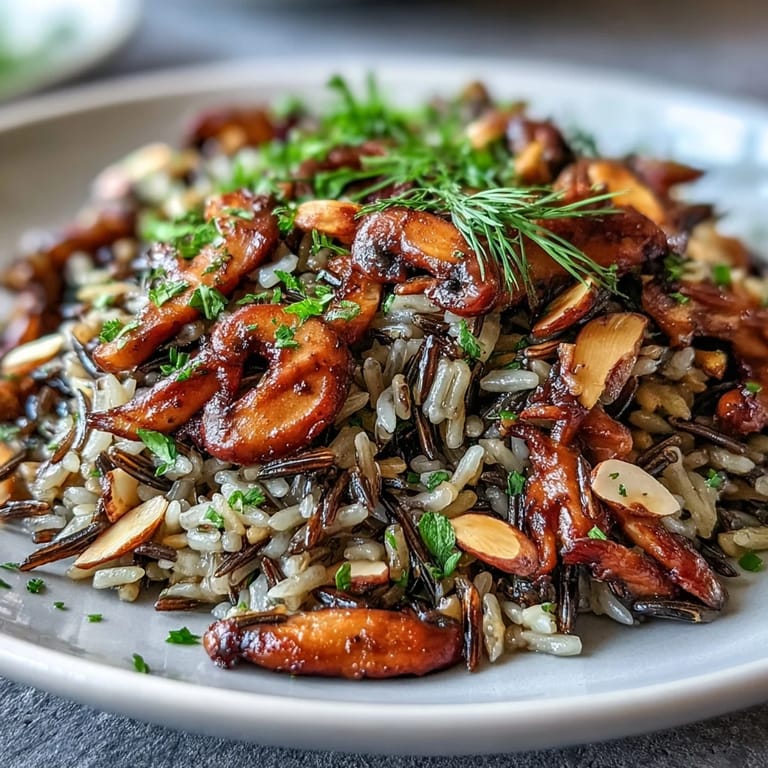
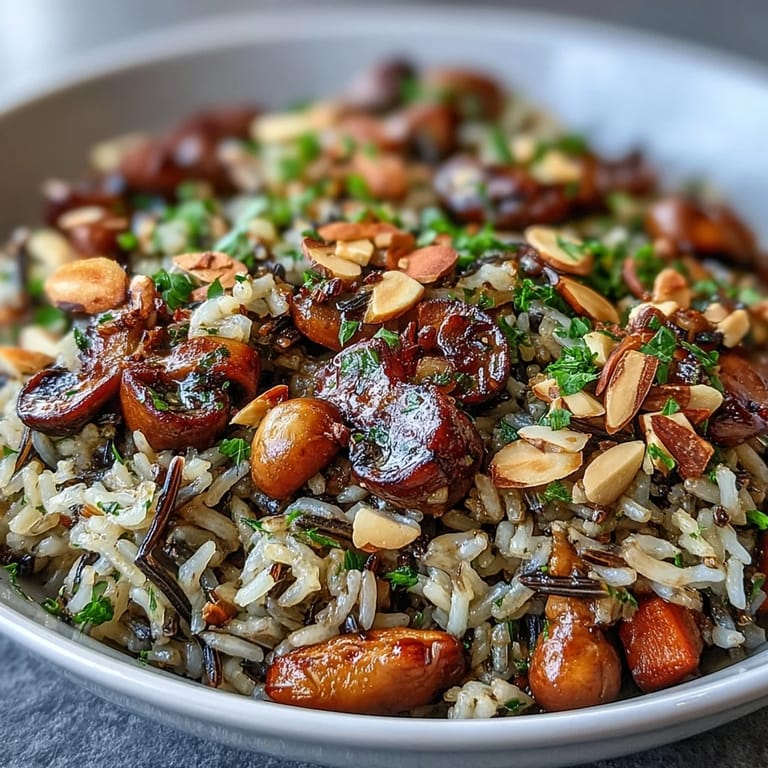
- Fresh parsley and toasted almonds: Parsley brightens everything at the end, while almonds add a textural surprise that makes people pause and notice.
Tired of Takeout? 🥡
Get 10 meals you can make faster than delivery arrives. Seriously.
One email. No spam. Unsubscribe anytime.
Instructions
- Start the wild rice:
- Bring the rice, broth, and water to a rolling boil, then immediately drop the heat to a gentle simmer and cover it. The wild rice will smell almost nutty as it opens up and releases its flavor into the liquid over the next 40 to 45 minutes.
- Build the base:
- While the rice does its work, warm olive oil in your skillet over medium heat and add the onion, celery, and carrot. You want to hear them sizzle gently, softening into a fragrant foundation without taking on any color, which takes about five to six minutes of occasional stirring.
- Deepen with mushrooms:
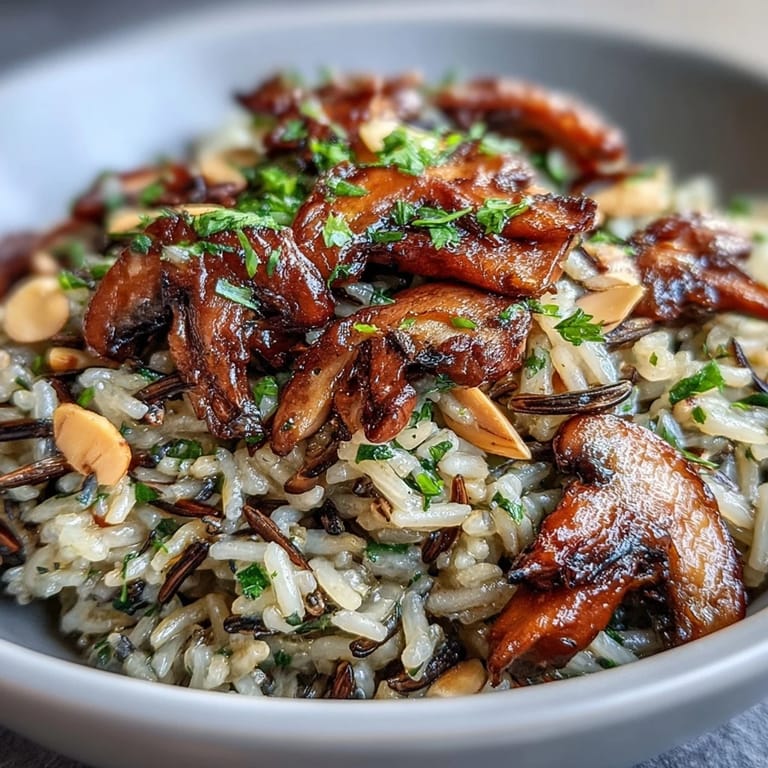
- Once the vegetables are tender, push them to the side slightly and add the garlic and mushrooms, letting them have their own space to brown. The mushrooms will release moisture that looks like it shouldn't be there, but that liquid is where flavor lives, and it'll eventually evaporate to leave behind concentrated earthy richness.
- Season and rest:
- Stir in the thyme, bay leaf, salt, and pepper, letting everything cook together for just about a minute so the herb flavors bloom. Fish out the bay leaf before moving forward, or leave it in as a reminder to pull it out later if you forget.
- Bring it together:
- When the wild rice is tender, gently fold it into the mushroom mixture using a wooden spoon, being careful not to crush the grains. Taste it now, and add whatever seasoning feels right, knowing that you know your palate better than any recipe does.
- Finish and serve:
- Transfer everything to your serving dish, scatter the parsley across the top like confetti, and add those toasted almonds if you have them. Serve it warm, knowing it's equally good the next day and almost better if you let it sit in the fridge overnight and reheat it gently.
 Pin It
 My neighbor stood in my kitchen one evening as I finished this dish and said something that stuck with me: food that doesn't demand attention somehow deserves it most. This pilaf moves through the world quietly, nourishing people and making them want to cook more, which might be the highest compliment a recipe can receive.
Why This Pilaf Becomes a Favorite
There's something about wild rice that speaks to seasons changing and tables gathering around real conversation. Once you understand how it works, you stop seeing it as an ingredient and start seeing it as permission to slow down and pay attention to what you're creating. The pilaf never demands flashy techniques or hard-to-find items, which somehow makes it feel more honest than recipes that do.
What Happens When You Add Wine
A splash of dry white wine when the mushrooms hit the skillet transforms the whole thing into something that feels almost restaurant-quality without any fussing. The wine cuts through the earthiness, lifts the aromatics, and honestly makes you feel like you're doing something more sophisticated than you actually are. It evaporates quickly, leaving behind only its best parts, which is exactly what good wine should do in cooking.
Serving and Storage
This pilaf sits beautifully alongside roasted chicken, duck, or any poultry that appreciates a thoughtful companion dish. It also stands alone as a vegetarian main with enough substance to feel complete, and it reheats so gracefully that I often make double portions intentionally.
- Store leftovers in an airtight container in the refrigerator for up to four days, and warm gently in a skillet with a splash of water if needed.
- The almonds stay crunchier if you toast them just before serving rather than adding them at the beginning.
- Frozen mushrooms work in a pinch, though fresh ones caramelize more beautifully and deserve the extra dollar they usually cost.
 Pin It
 This pilaf taught me that the best recipes aren't the ones that show off; they're the ones that make people feel cared for. Make it when you want to cook something that matters without proving anything to anyone.
Recipe Questions & Answers
- → Why does wild rice take longer to cook than regular rice?
Wild rice is actually a semi-aquatic grass rather than true rice, with a tougher outer hull that requires 40-45 minutes of simmering to become tender and chewy.
- → Can I prepare this dish ahead of time?
Absolutely. The flavors actually improve after sitting for a few hours or overnight. Store in an airtight container in the refrigerator and reheat gently with a splash of broth or water.
- → What's the best way to prevent mushy mushrooms?
Cook mushrooms in a single layer without overcrowding the pan, and resist stirring too frequently. This allows moisture to evaporate and promotes golden browning for better texture.
- → Can I use other types of mushrooms?
Yes. Shiitake, portobello, or oyster mushrooms all work wonderfully. Mix varieties for complex flavor and texture—earthy shiitakes pair especially well with wild rice.
- → Is this dish suitable for freezing?
The cooked pilaf freezes well for up to 3 months. Portion into airtight containers or freezer bags, thaw overnight in the refrigerator, and reheat with a little liquid to refresh.
- → What protein pairs well with this pilaf?
Roast chicken, turkey, or pork tenderloin complement the nutty flavors beautifully. For vegetarian meals, serve alongside roasted tofu or simply top with toasted nuts for added protein.