 Pin It
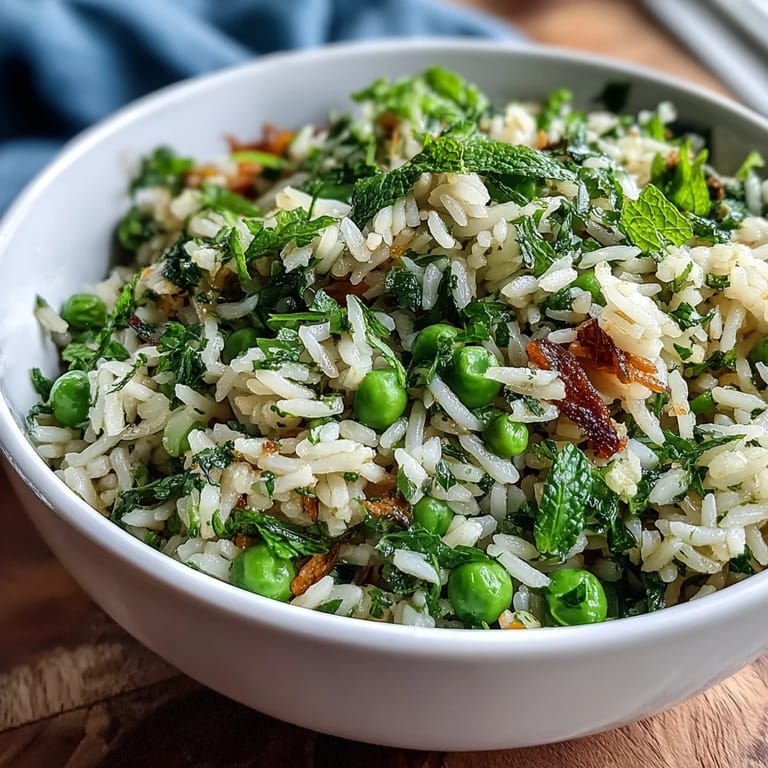
 My neighbor knocked on my door one April afternoon with a handful of fresh mint from her garden, asking if I knew what to do with it before it got away from her. That simple question led me to dust off my rice cooker and experiment with what would become my go-to spring side dish. There's something about the combination of bright mint and tender peas that tastes like the season itself—fresh, hopeful, and just a little bit fancy without any fuss.
I served this alongside a honey-glazed ham last Easter, and my sister asked for the recipe before she'd even finished her plate. What surprised me most was how the bright, herby flavors cut through the richness of the meat without feeling like you needed a palate cleanser. It became the unexpected star of the meal, and now it's the first thing people ask me to bring when spring entertaining happens.
Ingredients
- Long-grain white rice: Basmati or jasmine work beautifully here because they stay separate and fluffy, which lets all those fresh flavors shine through instead of getting lost in a mushy pile.
- Low-sodium vegetable broth: Skip the chicken broth for this one—you want the rice to taste like spring, not like Sunday dinner.
- Fresh spring peas: If you can find them fresh at the farmers market in spring, use them raw; frozen peas work just fine too and honestly taste almost as good.
- Unsalted butter: It's worth using good butter here because it's one of the few fat sources in the dish and it carries flavor.
- Fresh mint: This is non-negotiable—dried mint tastes like something from a tea bag, and that's not what we're going for.
- Lemon zest: Just a teaspoon brightens everything without making it taste aggressively citrusy.
Tired of Takeout? 🥡
Get 10 meals you can make faster than delivery arrives. Seriously.
One email. No spam. Unsubscribe anytime.
Instructions
- Rinse and prepare your rice:
- Run your rice under cold water in a fine mesh strainer, stirring gently with your fingers until the water runs mostly clear. This washes off excess starch so your grains stay separate and don't clump together.
- Build your flavor base:
- Melt butter over medium heat and soften your onion until it smells sweet and looks translucent, then add garlic and cook just until fragrant. You're looking for about 30 seconds total with the garlic—any longer and it starts to turn bitter.
- Toast the rice:
- Stir your drained rice into the butter and aromatics, coating every grain. This step takes just a minute or two but it adds a subtle nutty quality to the finished dish.
- Add liquid and bring to a boil:
- Pour in your broth, season with salt and pepper, and let it come to a rolling boil. You'll know it's ready when the liquid breaks the surface and steam starts rising.
- Simmer gently:
- Cover, reduce heat to low, and let it cook undisturbed for 15 minutes. Resist the urge to peek—every time you lift the lid, you lose steam.
- Stir in the peas:
- Add your peas right from frozen if that's what you have, or fresh if you're lucky enough. Cover again and cook for 5 more minutes until the rice is tender and the liquid has been absorbed.
- Rest and fluff:
- Take it off the heat, keep it covered for 5 minutes, then fluff gently with a fork. This resting period lets everything settle and the grains separate.
- Finish with fresh herbs:
- Stir in your mint, parsley if using, and lemon zest while the rice is still warm so the mint releases its oils. Taste and adjust your seasoning before serving.
 Pin It
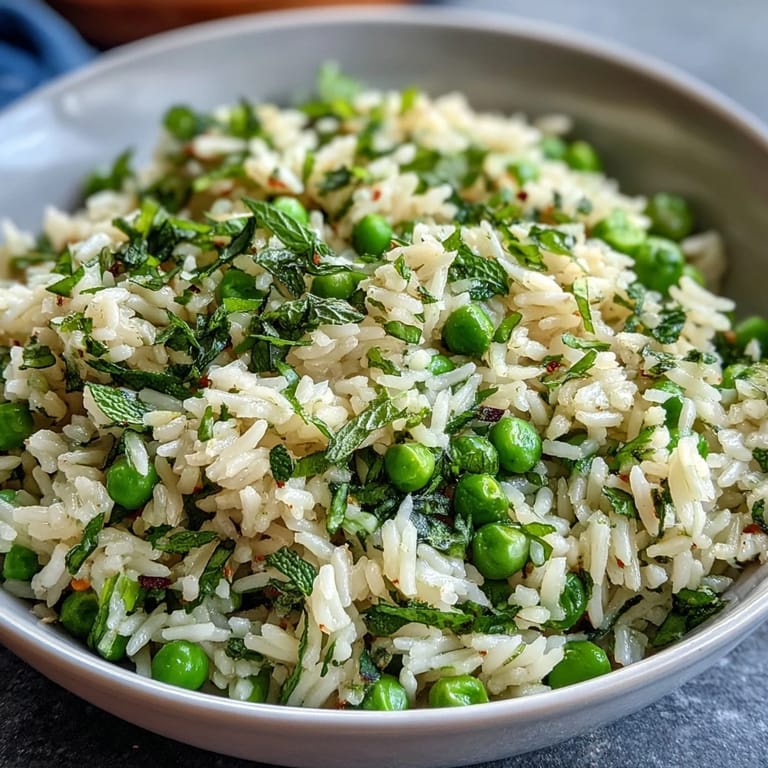
 There's a particular moment when you fluff that rice and the mint smell hits you—it's the moment you know you've made something good. My daughter calls this 'fancy rice' and it's the only way she'll eat her vegetables at dinner, which tells me everything I need to know about whether this recipe works.
When to Make This
This pilaf shines during spring and early summer when fresh mint is abundant and peas are at their sweetest. That said, frozen peas mean you can make it year-round whenever you're craving something light and green. I reach for it most often when I'm cooking for people who appreciate flavors that taste fresh rather than heavy.
Making It Your Own
The beauty of this pilaf is how flexible it is once you understand the basic method. I've added sautéed asparagus, swapped in different fresh herbs depending on what's in my garden, and even stirred in toasted pine nuts for texture. The framework stays the same, but you can make it feel entirely different based on what you have on hand.
Storage and Reheating
This pilaf keeps beautifully in the refrigerator for up to three days, though the mint flavor does fade slightly as it sits. Gently reheat it in a saucepan over medium-low heat with a splash of broth to restore moisture, or serve it at room temperature on warm days when you want something refreshing. It's one of those sides that actually works better than expected the next day because all the flavors have time to meld.
- Cover leftovers tightly so the rice doesn't dry out or absorb other flavors from the fridge.
- If you're making this ahead for entertaining, stop after fluffing and add the mint just before serving for maximum freshness.
- Cold pilaf works surprisingly well as a light lunch the next day if you stir in a little extra lemon juice.
 Pin It
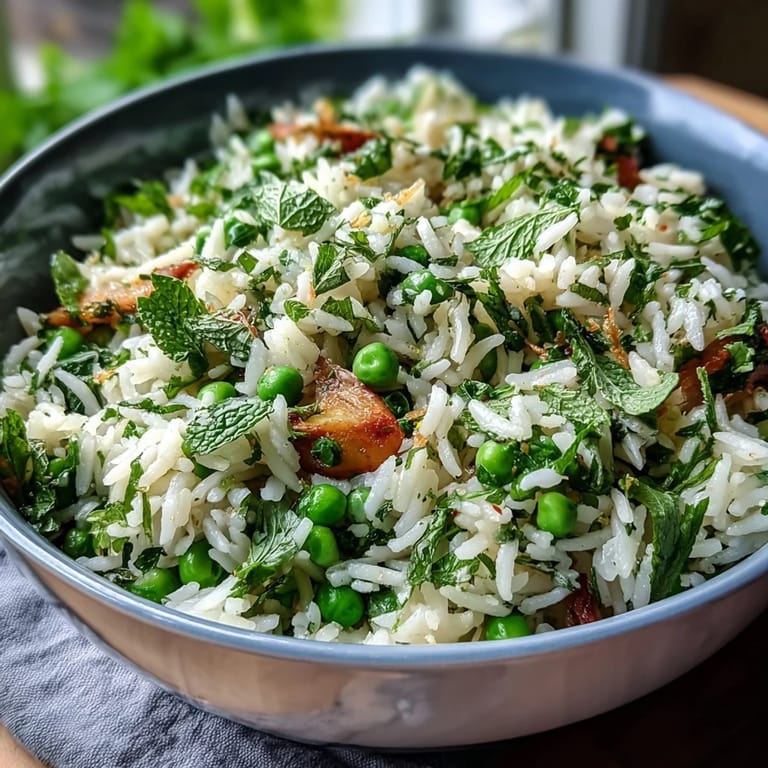
 This recipe has quietly become the thing I make most often when I want to feel like a good cook without spending hours in the kitchen. It tastes like someone who knows what they're doing made it, which is maybe the best compliment any weeknight side dish can receive.
Recipe Questions & Answers
- → Can I use frozen peas for this dish?
Yes, frozen peas can be added directly from the freezer during the last few minutes of cooking, maintaining their sweetness and texture.
- → What type of rice works best for this pilaf?
Long-grain varieties like basmati or jasmine rice provide a fluffy texture and fragrant aroma that complements the herbs and peas.
- → How can I make this dish vegan?
Replace the butter with plant-based butter or olive oil to keep it rich and dairy-free while preserving flavor.
- → Is it necessary to rinse the rice before cooking?
Rinsing removes excess starch and helps achieve a light, separated grain texture in the final pilaf.
- → Can I prepare this pilaf ahead of time?
Yes, it can be made in advance and gently reheated with a splash of broth to refresh the moisture and flavor.