 Pin It
 The first time I opened a jar of sloe gin at a farmhouse kitchen in the Cotswolds, I didn't expect it to end up in a stew. My friend's grandmother had been steeping sloes since autumn, and she poured a generous splash into the pot with venison from the local estate. The kitchen filled with a scent I can only describe as wild berries meeting woodsmoke. That evening changed how I thought about game meat entirely.
I made this for a small gathering during a January snowstorm, and no one wanted to leave the table. We sat there scraping our bowls, the windows fogged up, talking until the candles burned low. One friend who claimed she didn't like game meat went back for seconds. It became my winter signature dish after that night, the one people ask for when the temperature drops.
Ingredients
- Venison shoulder or stewing venison: The shoulder cut has just enough marbling to stay tender through long, slow cooking, and it doesn't dry out like leaner cuts can.
- Olive oil: A neutral base for browning that won't compete with the other flavors, though I've used a bit of bacon fat when I had it on hand.
- Onion, carrots, and celery: This classic trio builds a sweet, aromatic foundation that mellows beautifully as the stew simmers.
- Garlic cloves: Fresh garlic adds a warm, pungent note that deepens the overall richness without shouting.
- Tomato paste: Just a spoonful caramelizes in the pan and adds umami depth that ties everything together.
- Sloe gin: The star ingredient, bringing tart berry sweetness and a subtle almond hint from the sloe stones.
- Beef or game stock: Use the best you can find or make, it becomes the body of the sauce and carries all the flavors.
- Redcurrant jelly: A little sweetness and acidity that brightens the sauce and gives it a lovely gloss.
- Bay leaves and fresh thyme: Herbal backbone that infuses slowly, adding layers without taking over.
- Juniper berries: Lightly crushed, they echo the gin and add a piney, resinous note that feels right with game.
- Polenta: Quick-cooking or traditional both work, but I prefer the creamier texture of regular polenta when I have the time.
- Whole milk and water: This combination keeps the polenta creamy without being too heavy or cloying.
- Unsalted butter: Stirred in at the end, it makes the polenta silky and adds a gentle richness.
- Grated Parmesan cheese: The salty, nutty finish that makes polenta irresistible and keeps you coming back for more.
Tired of Takeout? 🥡
Get 10 meals you can make faster than delivery arrives. Seriously.
One email. No spam. Unsubscribe anytime.
Instructions
- Brown the venison:
- Heat olive oil in a heavy casserole over medium-high heat until shimmering. Brown the venison cubes in batches without crowding, letting each piece develop a deep, caramelized crust before setting aside.
- Cook the vegetables:
- Add onion, carrots, and celery to the same pan, scraping up any browned bits. Let them soften for 5 to 7 minutes, then stir in garlic and tomato paste, cooking until fragrant.
- Deglaze with sloe gin:
- Return the venison to the pot and pour in the sloe gin, letting it bubble and reduce for 2 minutes. The alcohol will cook off, leaving behind a fruity, complex sweetness.
- Add stock and aromatics:
- Stir in stock, redcurrant jelly, bay leaves, thyme, and crushed juniper berries. Season with salt and pepper, then bring everything to a gentle simmer.
- Simmer the stew:
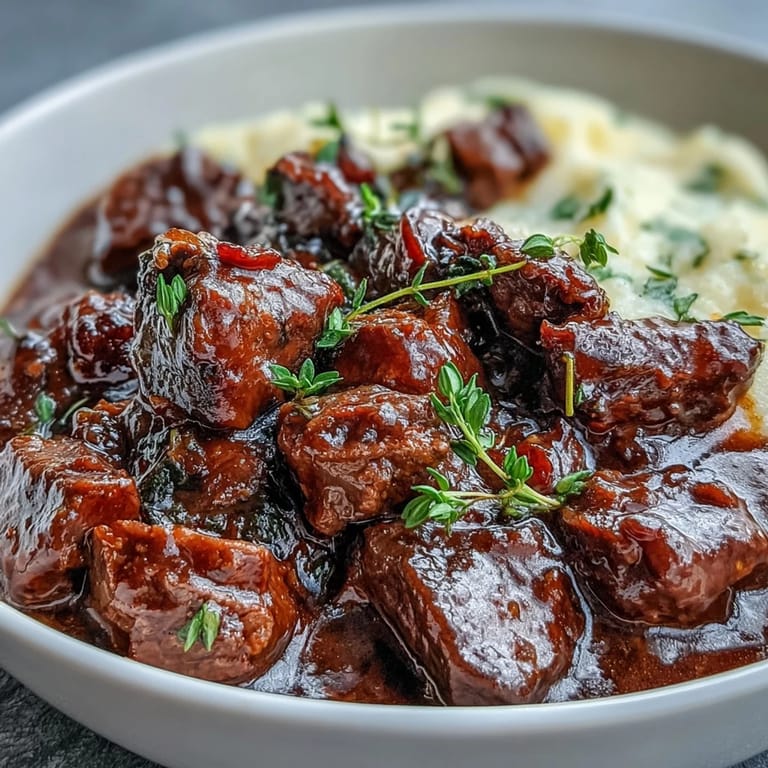
- Cover and cook on low heat for 2 hours, stirring occasionally. The venison should become fork-tender, and the sauce will thicken into something rich and glossy.
- Prepare the polenta:
- While the stew simmers, heat milk and water in a saucepan until just simmering. Gradually whisk in polenta, stirring constantly to avoid lumps.
- Finish the polenta:
- Cook over low heat for 5 to 10 minutes, stirring often, until thick and creamy. Stir in butter and Parmesan, then season with salt to taste.
- Serve:
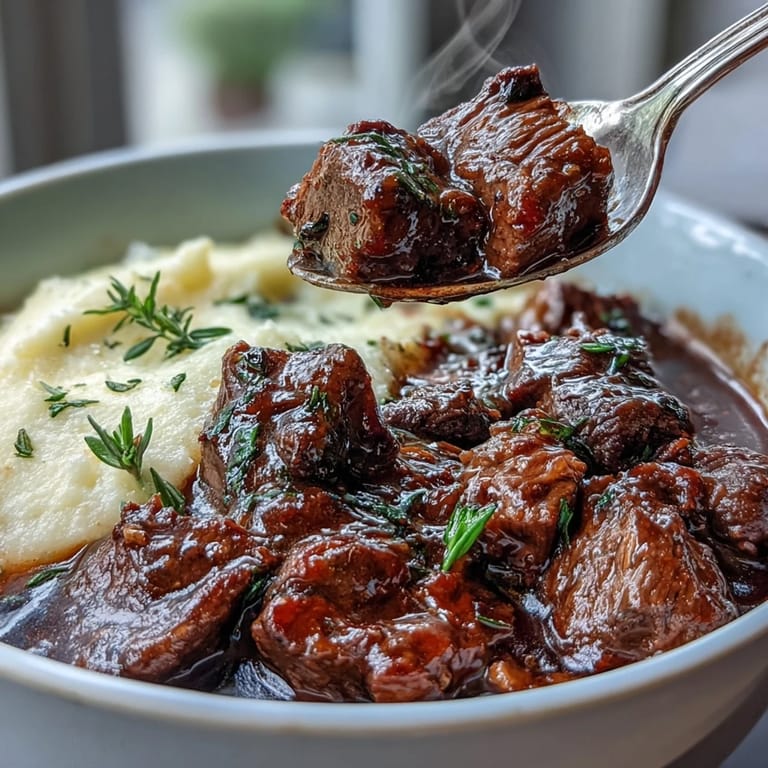
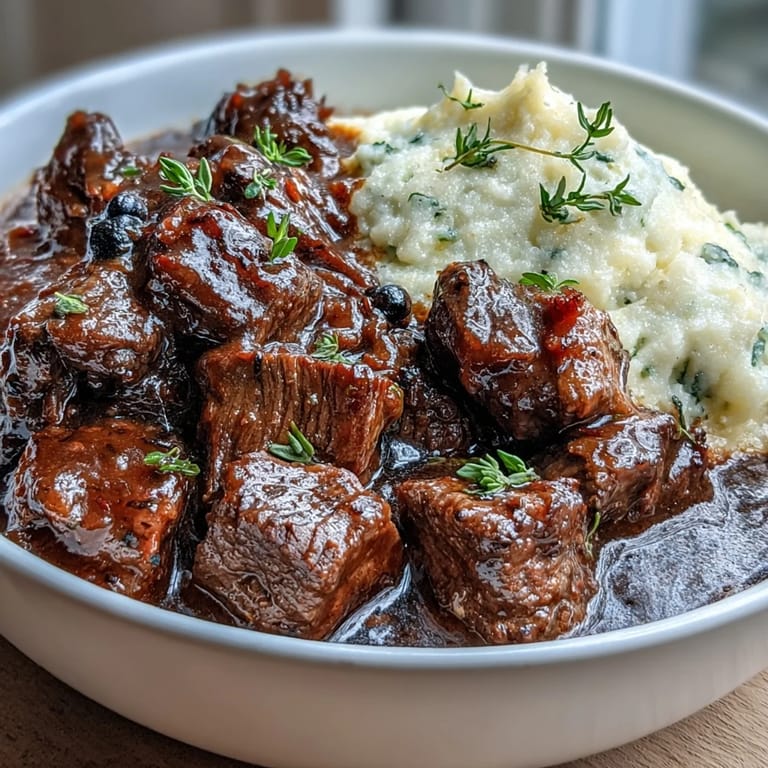
- Remove bay leaves and thyme sprigs from the stew. Ladle the venison over creamy polenta, making sure each serving gets plenty of that beautiful sauce.
 Pin It
 There's a moment when you lift the lid after two hours and the steam carries that unmistakable scent of slow-cooked game and berries. It's the smell that makes everyone wander into the kitchen asking when dinner will be ready. I've learned to make extra because there are never leftovers, though the stew does taste even better the next day if you can manage to save some.
Choosing Your Venison
Shoulder cuts are ideal for stewing because they have enough connective tissue to break down into tender, flavorful meat. If you can only find diced venison, make sure the pieces are at least 3 cm, anything smaller will overcook and dry out. I've used both farmed and wild venison, and while wild has a stronger, more mineral taste, farmed is milder and more forgiving if you're new to cooking game.
About Sloe Gin
Sloe gin isn't just sweetened gin, it's made by steeping wild sloe berries in gin with sugar, and the result is tart, fruity, and faintly almond-like. If you can't find it, a good port or blackberry liqueur works in a pinch, though the flavor will shift slightly. I once used damson gin and it was equally wonderful, just a bit sweeter and more plummy.
Making It Your Own
This stew is forgiving and welcomes small changes based on what you have. A splash of red wine alongside the sloe gin deepens the color and adds tannin. Some people like to add mushrooms in the last 30 minutes for an earthy touch. If you're not a polenta person, serve it over mashed potatoes, creamy grits, or even buttered egg noodles.
- Stir in a handful of chopped parsley or thyme just before serving for a fresh, herbal lift.
- For a richer sauce, whisk in a tablespoon of cold butter at the end off the heat.
- Leftovers reheat beautifully, just add a splash of stock to loosen the sauce.
 Pin It
 This is the kind of dish that turns a cold night into something special without any fuss. Serve it with a good red wine and someone you enjoy talking to, and you've got everything you need.
Recipe Questions & Answers
- → Can I substitute the venison with another meat?
Yes, you can use beef chuck, lamb shoulder, or wild boar as alternatives. Adjust cooking time as needed; beef may require an additional 30 minutes to become tender.
- → What can I use instead of sloe gin?
Port, blackberry liqueur, or a good-quality red wine work well as substitutes. Each will bring a slightly different flavor profile but maintain the rich, fruity depth of the dish.
- → Can I make this ahead of time?
Absolutely. The stew actually improves when made a day ahead, allowing flavors to meld. Store in the refrigerator and reheat gently. Prepare fresh polenta just before serving for best texture.
- → How do I know when the venison is tender enough?
The meat should easily break apart with a fork and feel melt-in-your-mouth tender. If it's still tough after 2 hours, continue simmering for another 30-60 minutes with additional stock if needed.
- → Can I use instant polenta instead of regular?
Yes, instant or quick-cooking polenta works perfectly and significantly reduces preparation time to about 5 minutes. Follow the package instructions and finish with butter and Parmesan as directed.
- → What side dishes pair well with this meal?
Roasted root vegetables, sautéed greens like kale or spinach, or a simple arugula salad with lemon vinaigrette complement the rich stew beautifully without overwhelming the palate.