 Pin It
 There's something about a steaming bowl of miso ginger soup that stops you mid-winter and makes you pause. I discovered this recipe on a particularly gray afternoon when the kitchen felt too quiet, and I wanted something that would fill the space with warmth and purpose. The first sip brought back a conversation I'd had with a friend about how the best soups aren't complicated—they're just honest. This one became my go-to whenever I needed to feel grounded again.
I made this for my roommate on a night when she came home completely exhausted from work, and watching her eat it quietly at the kitchen counter told me everything I needed to know. The bowl just sat there between us, steam rising, and neither of us needed to say much. Food like this has a way of communicating what words sometimes can't.
Ingredients
- Vegetable broth (6 cups): The foundation matters more than you'd think—low-sodium lets the other flavors breathe without drowning everything out.
- Fresh ginger (2-inch piece): Peel it just before slicing so you catch all that bright, sharp bite that makes the whole soup sing.
- Garlic (2 cloves): Thin slices distribute the flavor evenly instead of giving you aggressive chunks that catch you off guard.
- White or yellow miso paste (2 tablespoons): This is where the probiotic magic lives—don't skip it thinking salt will do the same job, because it won't.
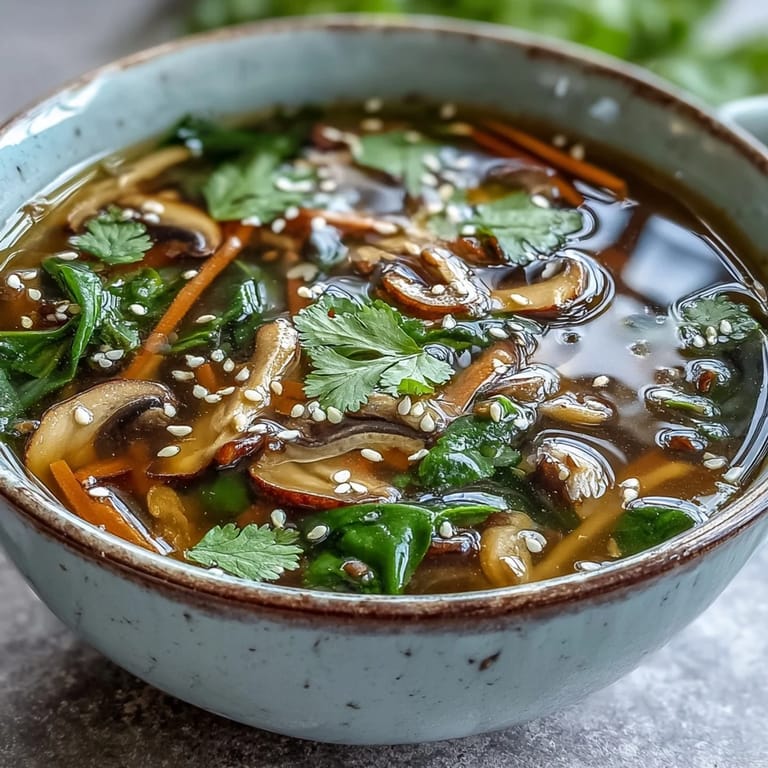
- Shiitake mushrooms (1 cup): They soften into the broth and release this earthy complexity that makes the whole thing feel less like soup and more like a ritual.
- Baby spinach or bok choy (1 cup): Either works beautifully, but bok choy holds its shape better if you like that slight resistance when you bite.
- Carrot (1 medium): Julienne it thin so it cooks in the time everything else does and doesn't hold you hostage waiting for it to soften.
- Green onions (2): Save these for the end—they keep their snap and add a brightness that ties the whole thing together.
- Toasted sesame seeds (1 tablespoon): Toast them yourself if you can; the kitchen will smell incredible and they'll taste exponentially better.
- Fresh cilantro (1 tablespoon, optional): If you like it, it adds a herbal note that some people find essential and others find optional—know yourself here.
- Chili oil or red pepper flakes (1 teaspoon, optional): A tiny touch gives you warmth on top of warmth, which is either exactly what you want or not.
Tired of Takeout? 🥡
Get 10 meals you can make faster than delivery arrives. Seriously.
One email. No spam. Unsubscribe anytime.
Instructions
- Start with intention:
- Pour your broth into a large saucepan and set the heat to medium, listening for that gentle simmer to start—not a rolling boil that announces itself too loudly. You want the surface just barely moving, lazy and purposeful.
- Build the foundation:
- Slip the ginger and garlic into the warm broth and let them have 10 minutes alone to perfume everything. This isn't multitasking time—step back and let them work their magic while you prep the vegetables.
- Add substance:
- Drop in the mushrooms and carrot now, giving them about 5 minutes to soften without completely surrendering their texture. You want them tender enough to know they're done, firm enough to know they still exist.
- The miso moment:
- This is the part that matters most: ladle out a cup of hot broth and pour it into a small bowl with the miso paste, whisking until it's completely smooth with no lumps hiding anywhere. It takes maybe a minute of real attention, and it's worth every second.
- Bring it home gently:
- Lower the heat to low and stir that miso mixture back into the pot slowly, making sure it distributes evenly. Keep the temperature low—high heat will kill the probiotics and undo the whole reason you chose miso in the first place.
- Final additions:
- Add the spinach or bok choy and green onions, stirring until they wilt down into the broth, which takes about a minute. Taste it now and decide what it needs—more miso for depth, a splash of soy sauce for salt, or maybe nothing at all.
- Serve with ceremony:
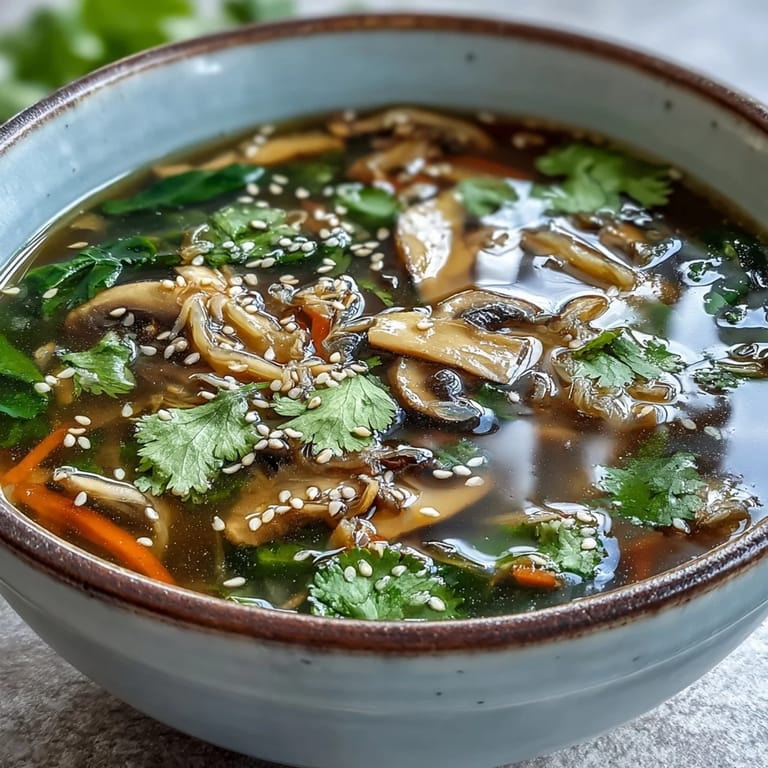
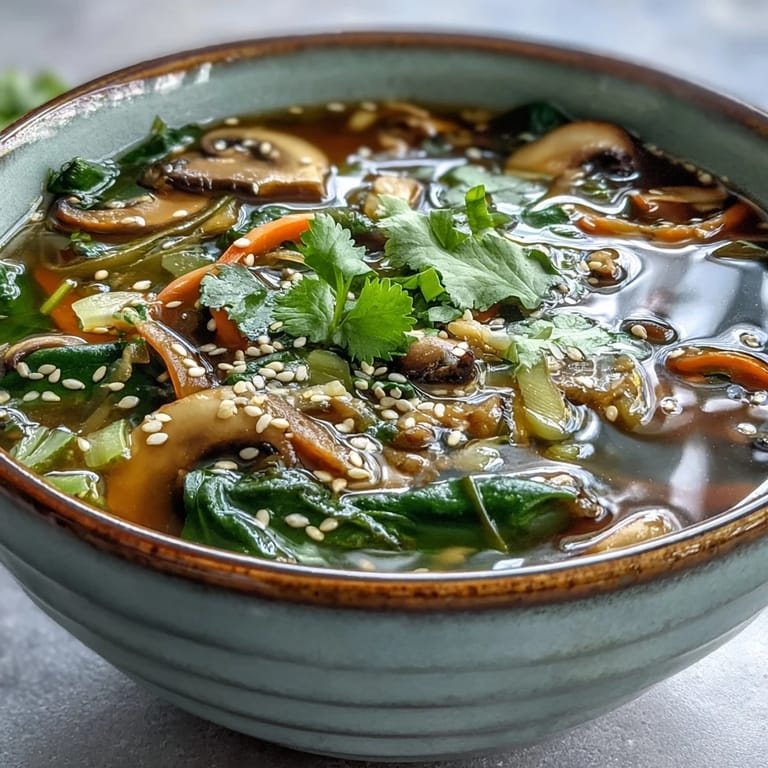
- Ladle the soup into bowls and top each one with sesame seeds, cilantro if you want it, and a small drizzle of chili oil if you're feeling brave. The toppings aren't decoration—they're the final note that makes it memorable.
 Pin It
 There was this one time I made it for myself on a Sunday morning when everything felt too much, and by the second spoonful I could actually feel my shoulders drop away from my ears. Soup that nourishes you isn't always about the ingredients—sometimes it's about the permission you give yourself to slow down and let something warm take care of you for a moment.
Flexibility Is Your Friend
This recipe has so much room to move around in that it's almost impossible to mess up if you keep the miso moment sacred. Silken tofu can slip in for extra protein without changing the character of the soup, red miso will give you a deeper, funkier depth if you want that, and noodles can turn this into something heartier when you need more staying power. I've made it with every green I could find—kale, mustard greens, mizuna—and they all work as long as you give them enough time to soften into the broth.
The Sip Test
Before you ladle it into bowls, taste it directly from the spoon and let it sit on your tongue for a second. That's where you figure out if it needs adjusting, if it's singing or if it's still searching for its voice. Sometimes it needs nothing; sometimes it needs just a crack more salt or a whisper more ginger.
Season It Like You Know What You're Doing
Seasoning is the difference between soup that tastes like something and soup that tastes like everything. Start with what the recipe gives you, then taste and adjust with purpose instead of just tossing things in and hoping. The miso carries a lot of salt already, so go easy—you can always add more, but you can't take it out.
- Taste before you serve, not after you've already filled the bowls and sat down to eat.
- Keep a bottle of good soy sauce nearby for those moments when the soup feels like it's missing something intangible.
- Remember that the toppings—especially the chili oil—add their own flavor, so factor that into your seasoning decisions.
 Pin It
 This soup is what I reach for when I want to feel held by something simple and true. It's the kind of meal that reminds you why kitchens exist in the first place.
Recipe Questions & Answers
- → Can I use different types of miso paste?
Yes, white or yellow miso provides a mild, slightly sweet flavor, while red miso offers a deeper, more robust taste. Choose based on your flavor preference.
- → How do I preserve the probiotics in miso?
Never boil the soup after adding miso paste. Mix miso with warm broth separately, then stir into the pot over low heat to maintain beneficial probiotics.
- → What vegetables can I substitute?
You can use bok choy instead of spinach, add kale, or include other Asian greens. Daikon radish, snap peas, or napa cabbage also work beautifully in this soup.
- → How can I make this soup more filling?
Add cubed silken or firm tofu for protein, or include cooked soba or udon noodles. Edamame also makes an excellent protein-rich addition.
- → Can I prepare this soup in advance?
The broth base can be made ahead and refrigerated for up to 3 days. Add fresh vegetables and miso just before serving for best texture and probiotic benefits.
- → What garnishes pair well with this soup?
Toasted sesame seeds, sliced green onions, fresh cilantro, and chili oil add wonderful flavor and texture. Nori strips or crispy shallots also make excellent toppings.