 Pin It
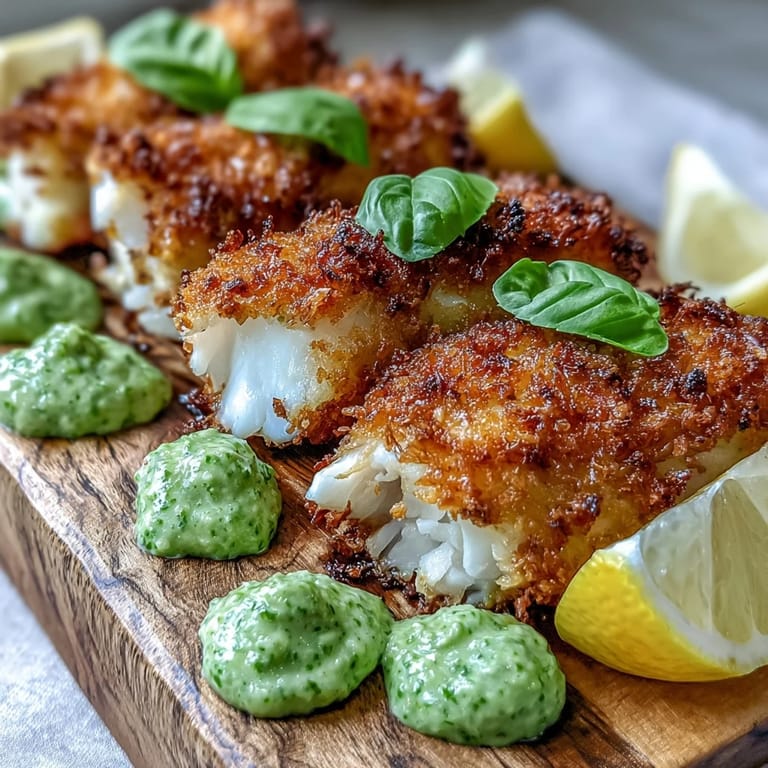
 The smell of toasted Parmesan still takes me straight back to a Tuesday night when I was trying to impress without really trying. I had haddock in the fridge, a jar of peas I'd forgotten about, and a hunch that something crunchy and cheesy might work. What came out of the oven that night wasn't just dinner, it was proof that you don't need a deep fryer to make something feel indulgent. The Parmesan crust turned golden and crackling, and the pea pesto brought everything to life with a brightness I hadn't planned on.
I made this for friends who claimed they didn't like peas, which felt like a small gamble. But when that bright green pesto hit the table, something shifted. They dipped, they nodded, they went quiet in that good way people do when food surprises them. One of them asked for the recipe before dessert even arrived, which is always the highest compliment.
Ingredients
- Skinless haddock fillets: Haddock holds its shape beautifully when baked and has a mild sweetness that doesn't fight the Parmesan, but cod or pollock work just as well if that's what you find fresh.
- Plain flour: This is your first layer of grip, the foundation that helps the egg stick and the whole crust stay put during baking.
- Large eggs: Beaten until smooth, they act like edible glue and give the panko something to cling to without getting soggy.
- Panko breadcrumbs: The secret to that shatteringly crisp texture, panko stays light and airy where regular breadcrumbs would go dense.
- Finely grated Parmesan cheese: This is where the magic lives, it crisps up in the oven and adds a salty, nutty depth that makes every bite feel special.
- Freshly ground black pepper: Just enough to add a gentle warmth without overpowering the delicate fish.
- Sea salt: Brings out the natural sweetness of the haddock and balances the richness of the Parmesan.
- Smoked paprika: Optional but lovely, it adds a whisper of smokiness that makes the crust feel more complex.
- Frozen peas: They blanch in minutes and bring a natural sweetness to the pesto that fresh peas sometimes lack.
- Fresh basil leaves: The herbal backbone of the pesto, it pairs with peas like they were always meant to be together.
- Parmesan cheese for pesto: A second hit of that nutty, salty goodness that ties the whole dish together.
- Small garlic clove: One is enough, you want a hint of sharpness without it taking over the delicate pea flavour.
- Pine nuts: They add creaminess and a subtle richness, but sunflower seeds work brilliantly if nuts are off the table.
- Extra-virgin olive oil: The good stuff makes a difference here, it smooths out the pesto and adds a peppery finish.
- Lemon juice: Brightens everything and cuts through the richness with a clean, sharp edge.
- Lemon wedges for serving: A squeeze at the table wakes up the whole plate.
- Mixed salad leaves: Optional, but they add a fresh crunch and make the plate feel more complete.
Tired of Takeout? 🥡
Get 10 meals you can make faster than delivery arrives. Seriously.
One email. No spam. Unsubscribe anytime.
Instructions
- Get the oven ready:
- Preheat to 200°C (180°C fan) or 400°F and line a baking sheet with parchment paper so nothing sticks. This step matters more than you think, a hot oven from the start means a crispier crust.
- Set up your coating station:
- Arrange three bowls in a row, one with flour, one with beaten eggs, and one with panko mixed with Parmesan, pepper, salt, and smoked paprika if using. This assembly line method keeps your hands from turning into a gluey mess.
- Coat the haddock strips:
- Dredge each piece in flour, shake off the excess, dip in egg, then roll in the Parmesan-panko mixture until fully covered. Lay them on the prepared baking sheet with a little space between each one so they crisp evenly.
- Bake until golden:
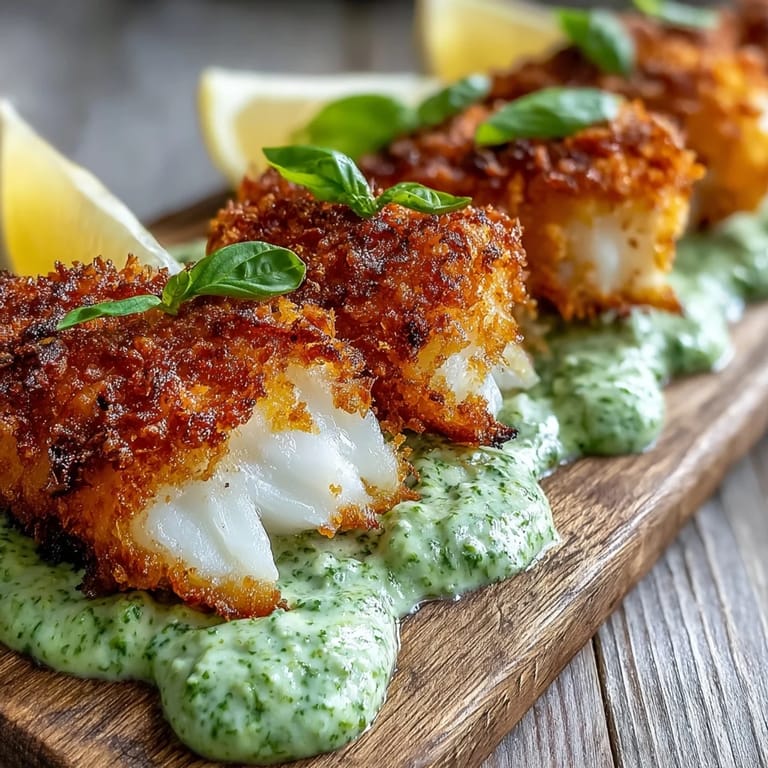
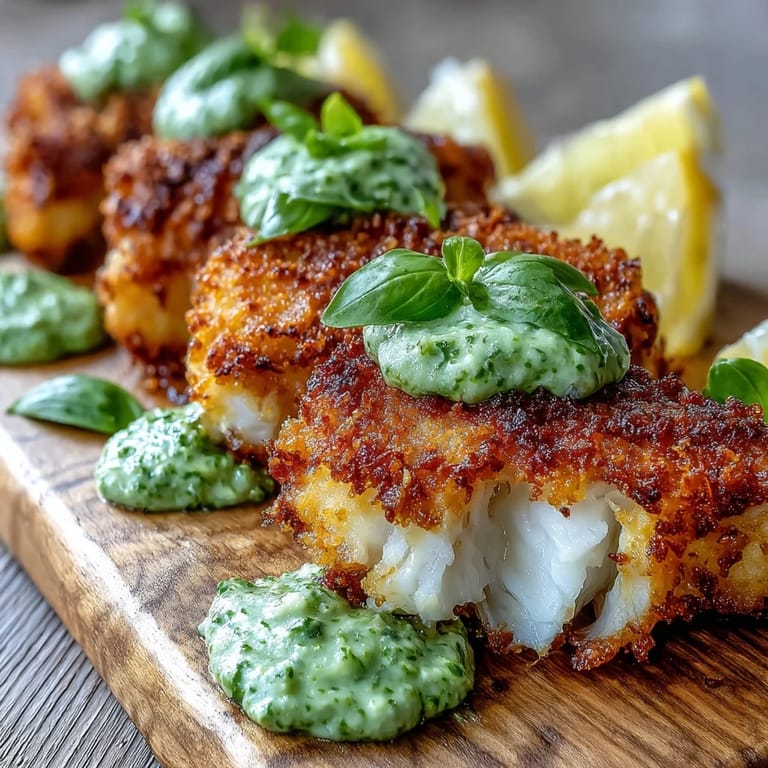
- Lightly spray or drizzle the goujons with olive oil, then bake for 15 to 20 minutes, flipping them halfway through. You're looking for a deep golden colour and a crust that crackles when you tap it.
- Blitz the pea pesto:
- While the fish bakes, blanch the peas in boiling water for 2 minutes, drain, and run them under cold water to keep that vibrant green. Throw them in a food processor with basil, Parmesan, garlic, pine nuts, olive oil, and lemon juice, then pulse until mostly smooth but still a little chunky.
- Bring it all together:
- Serve the hot goujons with a generous spoonful of pea pesto on the side, lemon wedges for squeezing, and salad leaves if you want something green and fresh. The contrast between hot, crispy fish and cool, bright pesto is what makes this dish sing.
 Pin It
 There's something quietly joyful about watching people dip crispy fish into bright green pesto and realising it works better than they expected. This dish doesn't shout, but it stays with you, the kind of meal that feels both familiar and just a little bit fancy. It's become my go-to when I want to cook something that feels effortless but tastes like I planned it all week.
Swaps and Substitutions
If haddock isn't available, cod and pollock are nearly identical in texture and flavour, they hold up just as well to baking and won't let you down. For a gluten-free version, swap in gluten-free flour and breadcrumbs without changing anything else, the crust will still crisp beautifully. Pine nuts can be replaced with toasted sunflower seeds for a nut-free pesto that's just as creamy and rich, and honestly, sometimes I prefer the milder flavour. If you're out of basil, try mint or a mix of parsley and spinach, the pesto will taste different but still vibrant and delicious.
Storage and Reheating
Leftover goujons keep in the fridge for up to two days in an airtight container, but they lose their crunch unless you reheat them properly. Pop them back in a hot oven at 200°C for about 8 minutes rather than microwaving, which will turn them soggy. The pea pesto lasts up to three days in the fridge and actually tastes better the next day when the flavours have had time to meld. If the pesto thickens too much in the fridge, just stir in a splash of olive oil or water to loosen it back up.
Serving Suggestions
These goujons feel at home on a big white plate with nothing but pesto and lemon, but they also love company. A handful of crispy oven chips or roasted new potatoes turns it into a full dinner, and a simple green salad with a sharp vinaigrette keeps things balanced. For something more relaxed, pile them into soft rolls with pesto, rocket, and a drizzle of mayo for the best fish finger sandwich you've ever had.
- Serve alongside roasted cherry tomatoes for a sweet, tangy contrast.
- Pair with a chilled Sauvignon Blanc or dry sparkling wine for a special occasion.
- Offer extra lemon wedges at the table, people always want more than they think.
 Pin It
 This recipe has earned its place in my regular rotation, not because it's complicated, but because it never fails to feel like a small celebration. Whether it's a Tuesday or a weekend, it brings a little sparkle to the table without asking too much of you.
Recipe Questions & Answers
- → Can I use a different fish instead of haddock?
Yes, cod or pollock work excellently as substitutes. Choose firm white fish fillets that hold their shape when cut into strips.
- → How do I make this gluten-free?
Simply replace the plain flour with gluten-free flour and use gluten-free breadcrumbs in place of panko. The cooking method remains the same.
- → Can the pea pesto be made in advance?
Absolutely. The pesto can be prepared up to 2 days ahead and stored in an airtight container in the refrigerator. Stir before serving.
- → What if I have a nut allergy?
Replace pine nuts with toasted sunflower seeds or pumpkin seeds for a nut-free version that's equally delicious and creamy.
- → Can I fry the goujons instead of baking them?
Yes, you can shallow fry them in vegetable oil over medium-high heat for about 3-4 minutes per side until golden and cooked through.
- → How do I know when the haddock is fully cooked?
The fish should be opaque throughout and flake easily with a fork. The internal temperature should reach 63°C (145°F).