 Pin It
 My coworker Sarah brought this Korean beef bowl to a potluck on a rainy Tuesday, and I watched three people go back for seconds before I even got a bite. There's something about the way gochujang transforms simple ground beef into something that tastes like it took hours, when really you're done in twenty minutes. I asked for her recipe that same day, made it that weekend, and suddenly my weeknight dinners felt less like obligations and more like something I actually wanted to eat.
I made this for my partner when they were dealing with a rough week at work, and I remember them sitting at the counter while I cooked, just breathing in the ginger and garlic sizzling in sesame oil. They ate the whole bowl without saying much, then looked up and asked if I could make it again next Tuesday. That's when I knew this wasn't just a recipe—it was the kind of simple, honest food that people actually remember.
Ingredients
- Lean ground beef (1 lb): Choose beef that's around 85/15 or 90/10 so you get flavor without a pool of grease, and you won't need to drain it as much.
- Gochujang (2 tablespoons): This Korean chili paste is the soul of the dish, bringing umami and heat that you can't fake with hot sauce alone—find it in the Asian section or online.
- Low-sodium soy sauce (3 tablespoons): Go low-sodium so you can taste the beef and sauce without it tasting like a salt lick, or use tamari if gluten matters to you.
- Brown sugar (2 tablespoons): It balances the heat and saltiness, creating depth instead of just a one-note spicy bite.
- Sesame oil (1 tablespoon): Use toasted sesame oil for cooking—the regular stuff has a milder flavor and a higher smoke point, but toasted adds that essential nutty Korean flavor.
- Garlic and ginger (2 cloves and 1 teaspoon): Fresh is non-negotiable here; the moment they hit the hot pan, your kitchen smells like you actually know what you're doing.
- Rice vinegar (1 tablespoon): This adds brightness that cuts through the richness and keeps everything from feeling heavy.
- Black pepper (1/2 teaspoon): A small amount in the sauce, then adjust after tasting because you're the one eating it.
- Rice or cauliflower rice (4 cups cooked): White rice is traditional and satisfying; cauliflower rice is the low-carb swap that actually tastes good here.
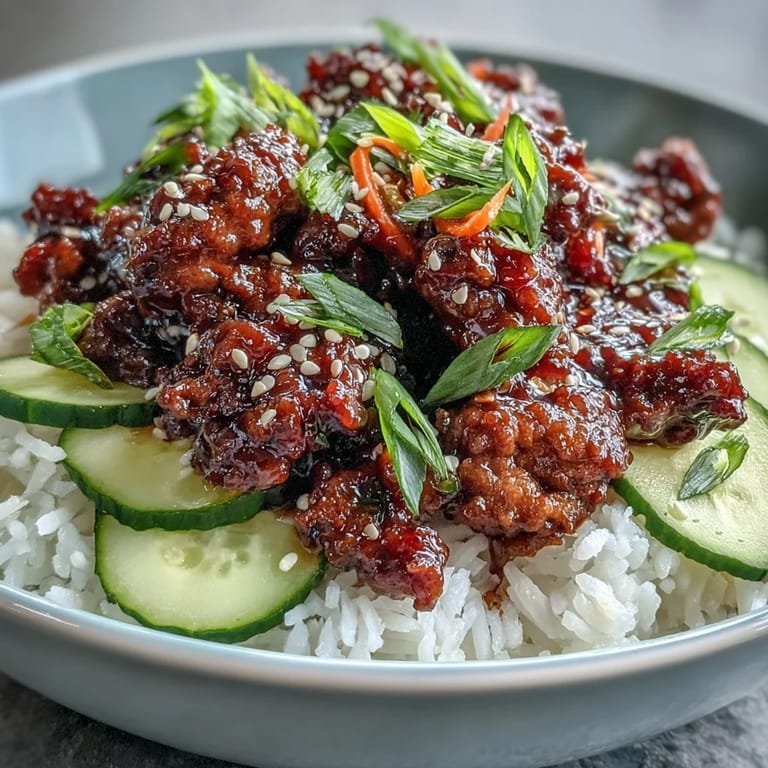
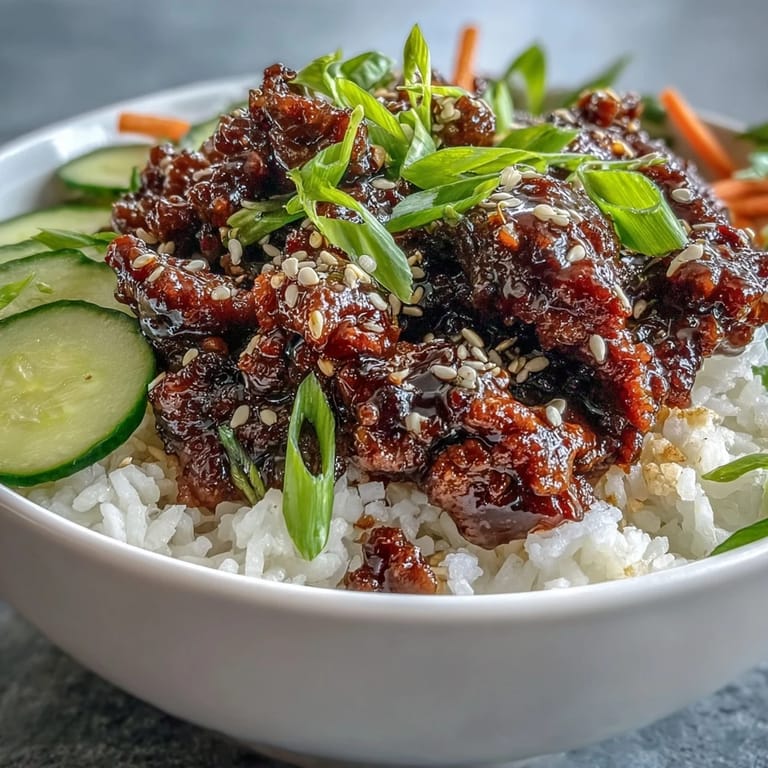
- Fresh vegetables for topping: Cucumber brings cool crunch, carrot adds sweetness, green onions provide sharp freshness, and sesame seeds give you texture—they're not optional decorations, they're essential balance.
Tired of Takeout? 🥡
Get 10 meals you can make faster than delivery arrives. Seriously.
One email. No spam. Unsubscribe anytime.
Instructions
- Heat your pan and brown the beef:
- Pour sesame oil into a large skillet over medium-high heat and let it get hot—you want to hear that sizzle when the beef hits. Add your ground beef and break it up with a wooden spoon, cooking for 4 to 5 minutes until it's browned and cooked through with no pink spots.
- Wake up the aromatics:
- Add your minced garlic and grated ginger, and stir constantly for about a minute until the kitchen smells incredible and the raw edge is gone. Don't let it burn, though—you want fragrant, not bitter.
- Build the sauce:
- Stir in gochujang, soy sauce, brown sugar, rice vinegar, and black pepper all at once, mixing until the gochujang is fully dissolved and coats every piece of beef. Let it simmer for 2 to 3 minutes, watching it thicken slightly and darken a bit as the flavors meld together.
- Taste and adjust:
- This is where you become the chef—taste it straight from the spoon and decide if it needs more heat, more salt, more sweetness. Trust yourself here because everyone's preferences are different.
- Build your bowl:
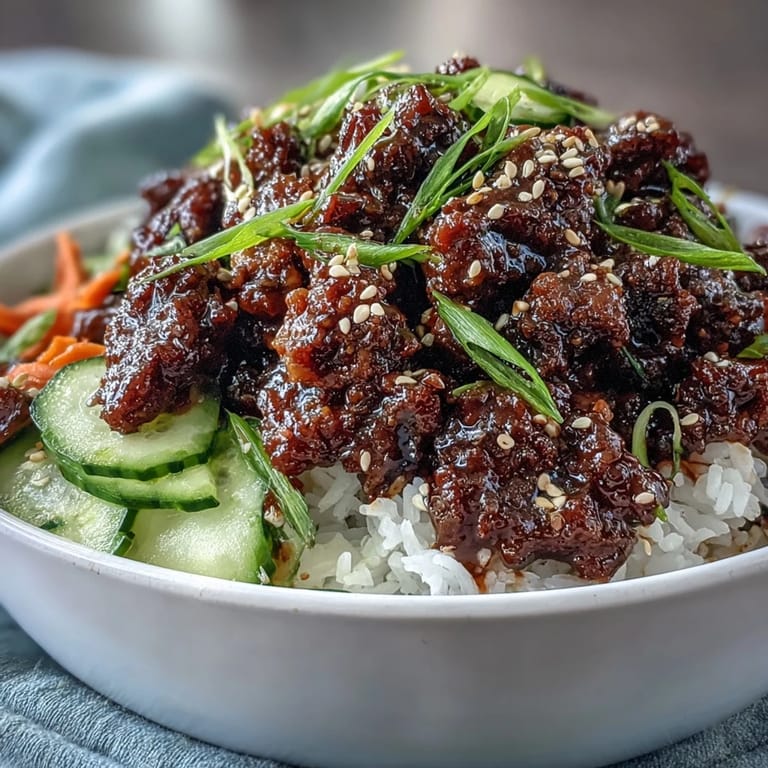
- Divide your cooked rice among bowls, spooning the beef and all its saucy goodness on top. Work quickly so the beef stays warm and the rice doesn't cool down.
- Finish with the fresh stuff:
- Top each bowl with cucumber slices, carrot, green onions, and a generous pinch of sesame seeds—plus chili or kimchi if you want to lean into the heat. The cool, fresh toppings against the warm savory beef is where the magic happens.
 Pin It
 There's a moment I always notice when someone takes their first bite of this bowl—their eyes widen a little, like they're surprised something this quick tastes this good. That shift from skepticism to satisfaction is why I keep making this.
Why This Sauce Works So Well
The magic isn't in any single ingredient; it's in how gochujang, soy sauce, and brown sugar create a trilogy of flavors that most people can't identify individually but absolutely taste in their whole mouth. Gochujang brings fermented depth and chili heat, soy sauce adds umami and saltiness, and brown sugar smooths everything out so it's not a one-note kick. Rice vinegar is the quiet hero—it brightens the whole thing up and prevents the sauce from sitting heavy on your tongue. When these four elements simmer together, they transform into something that tastes like it spent hours developing, but you know the truth: it took minutes.
Rice Decisions and What They Mean
White rice soaks up the sauce like it's meant to live there, and every spoonful tastes like the beef and sauce combined. Cauliflower rice keeps things lighter and lower-carb, but it won't absorb sauce the same way—you'll taste everything separately, which is fine if you prefer it that way. I've made this both ways depending on what I'm hungry for, and neither version is wrong; it's just about what kind of meal you need that day. Some nights I want the carbs and comfort; other nights I want to feel like I ate something virtuous while enjoying flavors that don't care about virtue.
Building Flavor Through Toppings
The fresh toppings aren't garnish—they're the second act of the dish, and leaving them off would be like cooking a meal without seasoning. Each element serves a real purpose: cucumber cools your palate, carrot adds subtle sweetness, green onions provide a sharp green note, and sesame seeds bring toasted nutty depth and textural interest. When you get all of them in one spoonful with the beef and rice, that's when you understand why Korean food makes sense. It's about balance and contrast and making sure every bite has multiple things happening at once.
- Toast your sesame seeds in a dry pan for two minutes if you have time—they go from okay to absolutely incredible.
- Slice your cucumber and carrot right before serving so they stay crisp and fresh instead of wilting into the warm bowl.
- If you're making this for guests, set up a little toppings bar and let people customize their own—everyone's heat tolerance is different anyway.
 Pin It
 This bowl became my answer to the question I ask myself most nights: what can I make that tastes good and doesn't make me want to cry in the kitchen? That's the real magic here.
Recipe Questions & Answers
- → What is gochujang?
Gochujang is a Korean fermented chili paste with a sweet, savory, and slightly spicy flavor profile. It's made from red chili powder, glutinous rice, fermented soybeans, and salt. You can find it in Asian grocery stores or the international aisle of well-stocked supermarkets.
- → Can I make this dish gluten-free?
Yes, simply substitute regular soy sauce with tamari and ensure your gochujang brand is certified gluten-free, as some varieties contain wheat. The rest of the ingredients are naturally gluten-free.
- → Is this dish very spicy?
The spice level is moderate with the gochujang. It has a gentle warmth rather than overwhelming heat. You can easily adjust by using less gochujang for a milder version or adding fresh chili peppers or sriracha to increase the heat.
- → Can I use ground turkey or chicken instead?
Absolutely. Ground turkey or chicken works well as a lighter alternative. Since poultry is leaner than beef, you may want to add a small amount of additional oil when cooking to prevent sticking.
- → How long do leftovers keep?
Store the beef mixture and rice separately in airtight containers in the refrigerator for up to 4 days. Reheat the beef gently in a skillet with a splash of water, adding fresh toppings just before serving for the best texture and flavor.
- → Can I freeze the beef mixture?
Yes, the seasoned beef freezes well for up to 3 months. Let it cool completely before transferring to a freezer-safe container. Thaw overnight in the refrigerator and reheat on the stovetetop or in the microwave.