 Pin It
 My neighbor knocked on my door one February evening with snow piling up outside, asking if I had something warm brewing. I threw together whatever vegetables were left in my crisper drawer and some beef I'd thawed that morning, and three hours later, we were ladling this soup into mismatched bowls, letting it cool just enough to taste. That simple moment taught me that the best soups aren't about fancy ingredients—they're about taking what you have and coaxing it into something that makes people linger at your table.
I made this for my sister's family the day before her surgery, wanting something she could eat without thinking too hard. Her eight-year-old asked for thirds, and her husband said it tasted like the kind of soup that fixes things. That's when I realized this recipe does more than fill bellies—it carries intention.
Ingredients
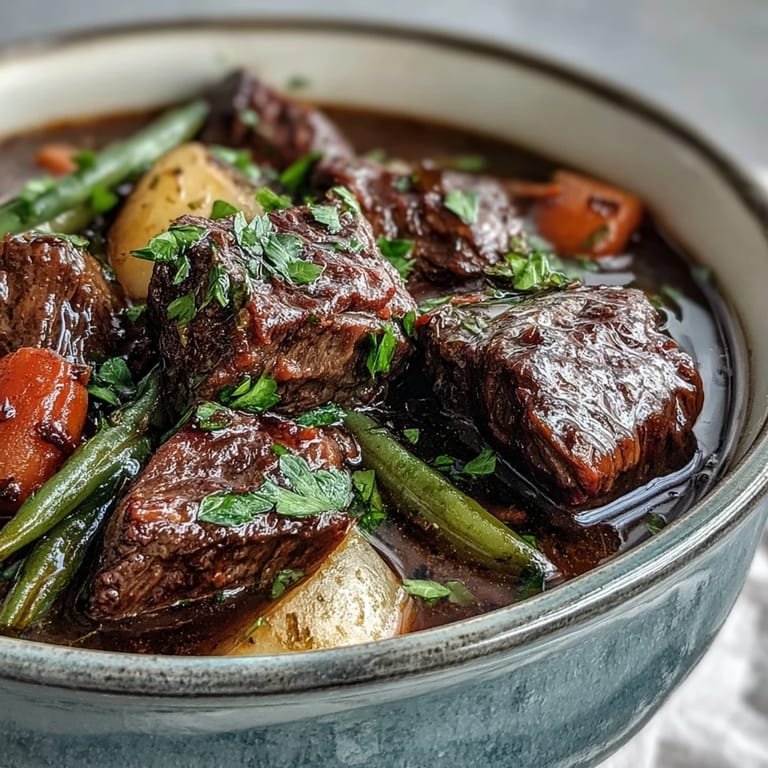
- Beef chuck (1.5 lbs, cut into 1-inch cubes): This cut has just enough marbling to become incredibly tender when braised, and the fat keeps everything moist instead of turning stringy.
- Olive oil (2 tbsp): You need enough to properly sear the beef without crowding the pan, which is how you build that deep, savory foundation.
- Onion, carrots, and celery (1 large onion, 3 medium carrots, 2 celery stalks): This trio is your aromatic base—they create the flavor backbone that makes people ask what you did differently.
- Garlic (3 cloves, minced): Adding it after the softer vegetables prevents it from burning and turning bitter, which I learned after a few kitchen mishaps.
- Potatoes (2 medium, peeled and diced): Waxy varieties like red potatoes hold their shape better than starchy ones, though either works depending on whether you prefer texture or slight creaminess.
- Parsnip (1, optional but recommended): This adds an earthy sweetness that regular potatoes can't touch, and it's worth hunting down even if it feels like an extra step.
- Green beans and peas (1 cup each): The peas go in near the end to stay bright and tender, while green beans can handle the longer cooking time.
- Diced tomatoes (1 can, 14.5 oz, undrained): The acidity balances all the richness from the beef, and using canned means you're not waiting for fresh tomato season.
- Beef broth (8 cups): This is where quality matters—a good broth tastes like actual meat, not just salt water, and it becomes the soul of the soup.
- Bay leaves, thyme, oregano, salt, and pepper: These herbs are restrained but purposeful, building flavor without screaming at you, and you can always adjust them once the soup tastes like itself.
- Fresh parsley (2 tbsp, for garnish): This final bright note wakes up the whole bowl and makes it feel finished rather than just cooked.
Tired of Takeout? 🥡
Get 10 meals you can make faster than delivery arrives. Seriously.
One email. No spam. Unsubscribe anytime.
Instructions
- Sear the beef until it's golden on all sides:
- Get your pot screaming hot with the olive oil, then add the beef in a single layer—don't crowd it or it will steam instead of sear. You're looking for deep brown color on each piece, about 5 to 7 minutes total, which takes longer than most people expect but makes everything that follows taste richer.
- Build your flavor base with the softer vegetables:
- After the beef comes out, add your onion, carrots, and celery to the same pot where the meat left its browned bits. Those stuck-on pieces are pure gold—let them dissolve into the vegetables as they soften, then add garlic just long enough to perfume the oil without burning.
- Combine everything and let it simmer low and slow:
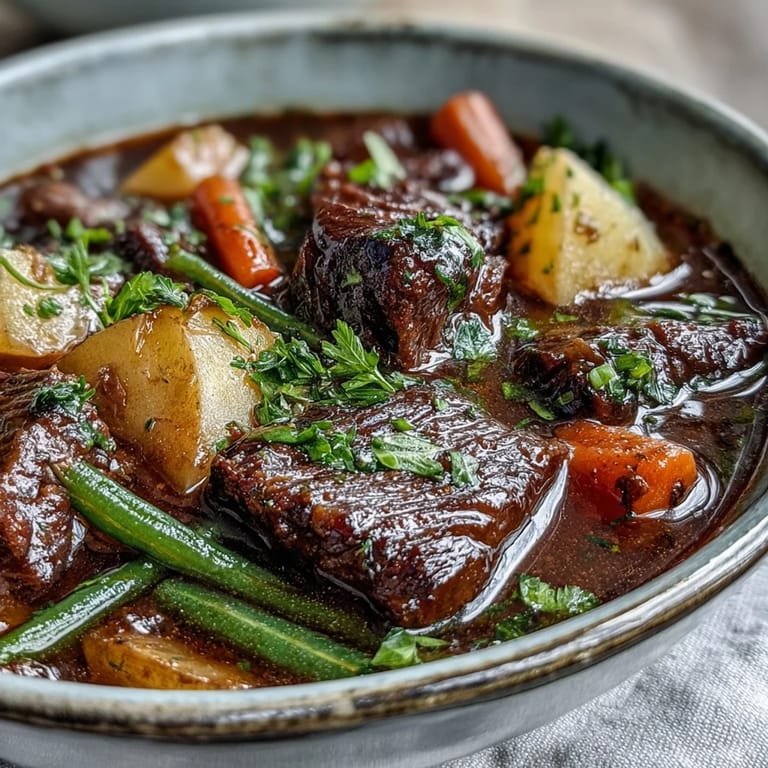
- Return the beef, add all your potatoes, parsnip, tomatoes, and that beautiful broth along with your herbs and seasonings. Bring it to a boil just long enough to see it happen, then immediately lower the heat and cover—this slow cooking is what transforms tough beef into something that falls apart at the gentlest spoon pressure.
- Finish with the quick-cooking vegetables:
- After an hour and fifteen minutes, when the beef is already tender, add your peas and green beans and let them cook uncovered for 10 to 15 minutes. You're racing against the clock here to keep them from going soft, so don't walk away.
- Taste, adjust, and serve:
- Pull out the bay leaves, take a taste, and season more if it needs it—sometimes broth varies and you'll want extra salt or pepper. Ladle it hot into bowls and finish with that fresh parsley, which makes everything feel intentional.
 Pin It
 The first time I served this to my partner's parents, his mom went quiet after the first spoonful, then asked if I'd made it from scratch. When I said yes, I watched something shift in how she looked at me—like I'd proven something without meaning to. That's when I understood this isn't fancy food, it's trustworthy food.
Why Beef Chuck Matters More Than You Think
Beef chuck gets overlooked because it's not expensive or trendy, but it's exactly what this soup asks for. The connective tissue breaks down into gelatin during the long braise, which thickens the broth naturally and makes every spoonful silkier. I used to reach for sirloin thinking it was better, but tougher meat actually becomes more tender than tender meat when given time and liquid—that's the kind of counterintuitive truth that makes cooking fun.
The Timing Game That Changes Everything
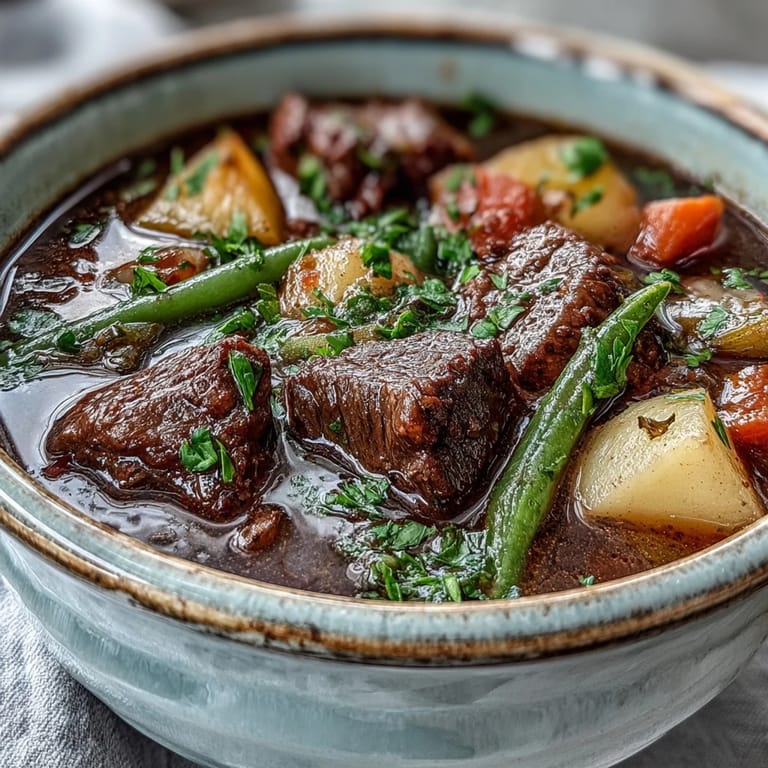
Vegetables are why people either love or dislike vegetable soup, and it comes down to when you add them. Potatoes and root vegetables need the full braise time to soften properly, while peas and green beans turn to mush if they cook longer than 15 minutes. I've started thinking of the soup as layers of time—the beef needs the most, the hard vegetables need medium time, and the bright vegetables need the least. Once you feel that rhythm, you stop overcooking things.
Storage and Transformation
This soup tastes even better the next day, which is wild because you'd think all that vegetable texture would suffer. Instead, the flavors deepen and the broth continues to thicken as the gelatin sets. I've kept it for four days in the refrigerator and it just kept getting better, and it freezes beautifully for up to three months if you leave a little room at the top of your container for expansion.
- Reheat gently over low heat without letting it boil, or the vegetables can start falling apart.
- Add fresh parsley right before serving every time, since it loses its brightness if it sits in the warm soup too long.
- Serve with crusty bread that you can use to soak up every last drop—that's not optional, that's the point.
 Pin It
 This soup has become my answer to almost every season, every reason to cook, every moment someone needs to feel cared for through food. Make it for yourself, make it for people you love, and let it remind you that sometimes the simplest things are exactly what the world needs.
Recipe Questions & Answers
- → Can I use a different cut of beef?
Yes, you can substitute beef chuck with beef stew meat, bottom round, or brisket. Choose cuts with some marbling for the most tender and flavorful results after simmering.
- → How do I make this soup in a slow cooker?
Brown the beef and sauté the vegetables first, then transfer everything to a slow cooker. Cook on low for 6-8 hours or high for 3-4 hours. Add the peas during the last 30 minutes of cooking.
- → Can I freeze this soup?
Absolutely! This soup freezes beautifully for up to 3 months. Cool completely before transferring to airtight containers. Thaw overnight in the refrigerator and reheat gently on the stovetop.
- → What vegetables can I substitute?
Feel free to swap in turnips, sweet potatoes, rutabaga, or butternut squash. Corn and lima beans also work well. Use whatever seasonal vegetables you have on hand.
- → How can I thicken the soup?
For a thicker consistency, mash some of the potatoes against the side of the pot, add a slurry of cornstarch and water, or stir in a tablespoon of tomato paste while simmering.
- → Why should I brown the beef first?
Browning the beef develops rich, caramelized flavors through the Maillard reaction. This extra step adds depth and complexity to the overall taste of the soup.