 Pin It
 My neighbor knocked on the door one April evening with a handful of mint from her garden, still dewy and fragrant. She'd caught the scent of risotto drifting through our shared wall and wanted to know what I was making. When I told her it was pea and mint risotto for a dinner party, she pressed those leaves into my palm and said, "You'll need these." She was right—that single gesture transformed how I've made this dish ever since, turning a simple spring recipe into something that tastes like generosity.
I made this for the first time when I was nervous about hosting six people I barely knew. The rhythm of stirring, waiting, stirring again became almost meditative—something to do with my hands while conversation found its footing. By the time we sat down, that nervous energy had melted into the risotto, and somehow the dish felt like a quiet confidence I'd managed to cook into it.
Ingredients
- Fresh or frozen green peas (1 cup): The soul of this dish—frozen ones work beautifully because they're picked at peak ripeness, though fresh spring peas have an almost delicate sweetness that feels like a small luxury.
- Arborio rice (1 1/2 cups): This short-grain rice has just enough starch to create that signature creamy texture without turning mushy, which is exactly why it's worth seeking out rather than substituting.
- Vegetable stock (4 cups, kept warm): Warm stock is non-negotiable here—cold stock will shock the rice and slow down cooking, so keep it gently steaming in a separate pot.
- Dry white wine (1/2 cup): The wine adds brightness and a subtle tang that balances the richness; I learned not to use anything I wouldn't drink, because the flavor absolutely comes through.
- Unsalted butter (3 tbsp, divided): Split between the beginning and the end—the first amount toasts the rice, the second creates that luxurious final texture.
- Freshly grated Parmesan (1/2 cup plus extra): Grate it yourself, not pre-shredded, because the anti-caking agents prevent it from melting smoothly into the creamy rice.
- Fresh mint leaves (1/4 cup, finely chopped): Add this at the very end so the flavor stays bright and doesn't cook away into bitterness.
- Lemon zest (from 1 lemon): This is the secret whisper that makes everything taste more alive and prevents the dish from feeling one-note rich.
- Salt and freshly ground black pepper: Taste as you go because the stock and Parmesan already contribute saltiness, and you don't want to oversalt.
- Fresh flat-leaf parsley (2 tbsp, optional): It adds a gentle herbaceous note if you want a bit more greenery, but mint is the star here.
Tired of Takeout? 🥡
Get 10 meals you can make faster than delivery arrives. Seriously.
One email. No spam. Unsubscribe anytime.
Instructions
- Build your flavor base:
- Melt 2 tablespoons of butter over medium heat and watch it turn golden and smell almost nutty. Add the finely chopped onion and let it soften slowly until it's translucent and sweet, then stir in the garlic just long enough to wake it up without letting it brown.
- Toast the rice:
- Pour in the Arborio rice and stir it around for about 2 minutes, coating each grain with that buttery warmth. You'll see the rice transform from pale to slightly golden, and hear it click gently against the pan—that's when you know it's ready.
- Add the wine:
- Pour in the white wine and stir until it's almost completely absorbed, about 2-3 minutes. The rice will start to look a bit creamy at the edges, which is your signal to move to the next step.
- Add stock gradually and stir constantly:
- This is where patience becomes your best technique. Add one ladleful of warm stock at a time, stirring almost constantly, and wait until it's mostly absorbed before adding the next ladle. The constant stirring releases the rice's natural starches, creating that signature creamy texture.
- Taste for doneness (18-20 minutes):
- After about 18-20 minutes, the rice should be tender but still have a subtle firmness in the center of each grain—that's al dente. If it still feels hard, add more stock and keep stirring; if it's creamy enough, move forward.
- Add the peas toward the end:
- During the last 5 minutes of cooking, stir in the peas so they stay bright green and tender rather than turning dull from overcooking. They'll warm through and add little bursts of sweetness.
- Finish with richness and brightness:
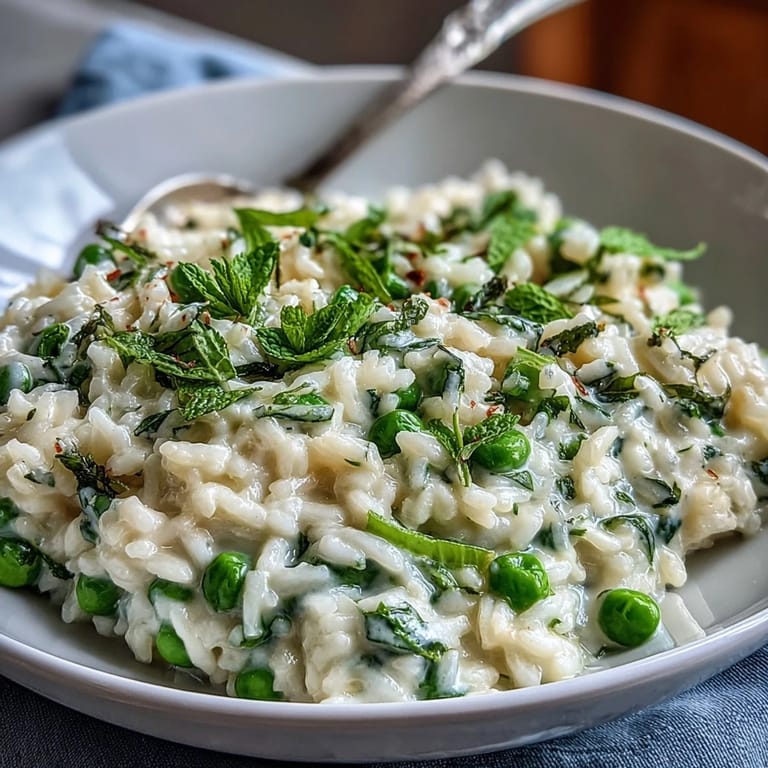
- Remove from heat and stir in the remaining tablespoon of butter, grated Parmesan, chopped mint, lemon zest, and any parsley you're using. The final butter creates an almost silky mouthfeel, and the mint should smell absolutely vibrant.
- Taste and serve:
- Taste a spoonful and adjust salt and pepper—remember that Parmesan is salty, so be gentle. Serve immediately into warm bowls, topped with extra Parmesan and a few fresh mint leaves.
 Pin It
 The first time my teenage daughter tasted this, she said it was "fancy but not try-hard," which somehow felt like the highest compliment. That's when I realized this recipe isn't about impressing people with complexity—it's about taking simple, beautiful ingredients and treating them with enough care that they shine on their own.
Why Constant Stirring Actually Matters
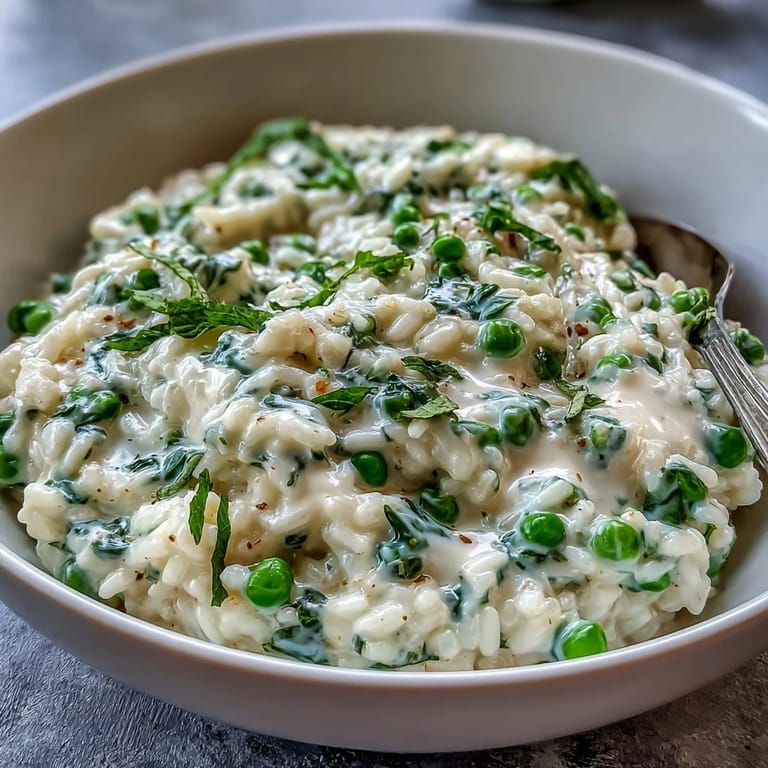
I used to think constant stirring was just something fancy cooks did to feel important, until I made two batches side by side—one I stirred faithfully, one I mostly left alone. The difference was shocking: the stirred batch was silky and flowing, while the neglected one turned thick and gluey. The constant motion keeps the rice grains moving, preventing them from sticking together and allowing the starch to disperse evenly throughout the liquid, creating that signature creamy texture that makes risotto feel like a hug in a bowl.
The Timing of Ingredients Matters More Than You'd Think
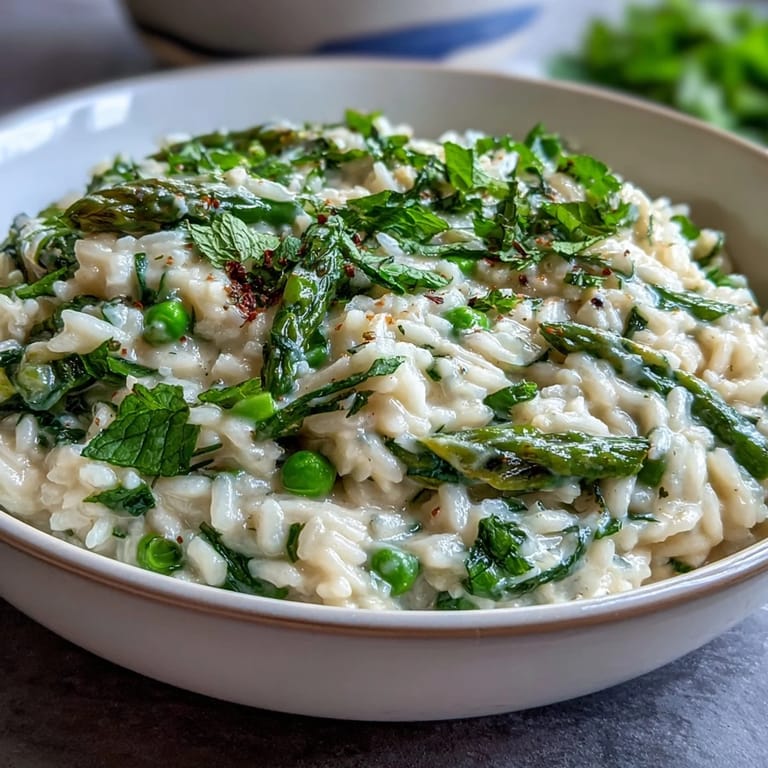
I learned this lesson by adding the mint too early and watching it fade to an almost brown-gray color, its fresh flavor cooking away into something dusty. Now I'm religious about waiting until the very end—the mint gets stirred in just as you're taking the pan off the heat, so it stays vibrant and punchy. Same thing with the lemon zest: it brightens the dish at the last moment, cutting through the richness with almost a sparkle of flavor.
Serving and Storage Tips
Risotto is one of those dishes that tastes best eaten the moment it's ready, steaming and at its creamy peak. If you do have leftovers, they'll keep in the refrigerator for a few days, though the texture will be thicker—you can revive them by gently reheating with a splash of water or stock.
- Serve in warm bowls so the risotto doesn't cool down too quickly and lose that flowing texture.
- A drizzle of good-quality olive oil on top adds richness and a subtle peppery note that feels like a small luxury.
- Pair with a crisp white wine like Sauvignon Blanc or Pinot Grigio, which cuts through the creaminess and complements the fresh pea and mint flavors perfectly.
 Pin It
 This risotto has become my quiet go-to whenever I want to cook something that feels special but not stressful, something that tastes like spring even in the middle of winter. It's proof that the best dishes don't need to be complicated—they just need attention, good ingredients, and maybe someone else's mint leaves pressed into your hand at exactly the right moment.
Recipe Questions & Answers
- → What type of rice is best for this dish?
Arborio rice is preferred as it absorbs liquid well and creates the creamy texture typical of this style of cooking.
- → Can I use frozen peas instead of fresh ones?
Frozen peas are a great substitute and can be added toward the end of cooking to retain their bright color and sweetness.
- → How do I achieve the perfect creamy texture?
Gradually adding warm vegetable stock while stirring constantly helps release starch from the rice, resulting in a smooth and creamy consistency.
- → What role does the white wine play in this preparation?
Dry white wine adds depth and subtle acidity, enhancing the flavors before the stock is added.
- → Is it possible to make this dish vegan-friendly?
Replacing butter and Parmesan with plant-based alternatives can make this dish vegan while maintaining creaminess and flavor.